Starting With The Name Of Almighty Allah
Muslims around the world celebrate two major Islamic festivals: Eid al-Fitr and Eid al-Adha. Although both are joyful occasions marked by prayer, gratitude, charity, and community, they are not the same. Understanding Eid al-Fitr vs Eid al-Adha helps explain not only when each Eid occurs, but also what each one represents in Islamic worship and daily life.
“Allah intends ease for you, not hardship.” (Quran 2:185)
This verse is closely connected to Eid al-Fitr because it comes in the context of Ramadan and the completion of fasting. In a simple sense, Eid al-Fitr is the celebration that follows a month of worship, while Eid al-Adha is tied to Hajj, sacrifice, and remembrance of Prophet Ibrahim’s devotion.
For students and families who want to understand Islamic teachings in a more guided way, Online Quran classes can help build a stronger foundation in Quranic learning, worship, and Islamic values. This makes it easier to connect important occasions like both Eids with their deeper religious meanings.
Eid al-Fitr and Eid al-Adha Meaning
The phrase Eid al-Fitr means the “festival of breaking the fast,” which reflects its direct link to the end of Ramadan. Eid al-Adha means the “festival of sacrifice,” which reflects its connection to Qurbani, Hajj, and the story of submission to Allah. These meanings are central to understanding the difference between Eid al-Fitr and Eid al-Adha in both worship and symbolism.
“We have made sacrificial camels and cattle among the symbols of Allah.” (Quran 22:36)
This verse explains why sacrifice is so closely associated with Eid al-Adha. It shows that the festival is not mainly about celebration in the worldly sense, but about honoring Allah through obedience, sacrifice, and generosity toward the needy.
For readers who want to understand the festival in more detail, Eid al-Adha: Meaning, Significance, Rituals, and Complete Guide for Muslims offers a fuller look at its religious background, key practices, and spiritual purpose.
Eid al-Fitr vs Eid al-Adha: The Core Difference
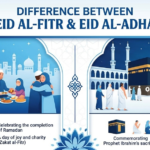
The simplest way to understand Eid al-Fitr vs Eid al-Adha is this: Eid al-Fitr comes after Ramadan, while Eid al-Adha comes during Dhul Hijjah and the Hajj season. Eid al-Fitr highlights gratitude for completing fasting, while Eid al-Adha highlights devotion, sacrifice, and the rituals connected to pilgrimage.
| Aspect | Eid al-Fitr | Eid al-Adha |
| Main meaning | Breaking the fast | Sacrifice |
| When it occurs | After Ramadan | During Dhul Hijjah, around Hajj |
| Main worship connection | Fasting, gratitude, Zakat al-Fitr | Hajj, Qurbani, remembrance of Ibrahim عليه السلام |
| Charity focus | Zakat al-Fitr before Eid prayer | Distribution of sacrifice and charity |
| Spiritual theme | Completion and gratitude | Submission and sacrifice |
| Community emphasis | Joy after fasting | Worship, sacrifice, and sharing meat with others |
The table above captures the main contrast in the difference between Eid al-Fitr and Eid al-Adha. Both are acts of worship and celebration, but each one carries a distinct message, ritual focus, and spiritual atmosphere.
If you are new to Islamic festivals, What Is Eid al-Adha? A Simple Explanation for Beginners can help you understand the basics before exploring the deeper differences between the two Eids. It explains the festival in a clear way, especially for readers who may be learning about Hajj, Qurbani, and Dhul Hijjah for the first time.
Why Are There Two Eids in Islam?
There are two Eids in Islam because Allah gave the Muslim community two divinely meaningful celebrations tied to core acts of worship. The Prophet Muhammad S.A.W established these two festivals as better alternatives to pre-Islamic celebrations, and the Sunnah shows that both are marked by prayer, khutbah, and communal joy.
“The Prophet ordered the people to pay Zakat-ul-Fitr before going to the Eid prayer.” (Sahih al-Bukhari 1509)
This hadith shows that Eid al-Fitr is directly linked to Ramadan’s end and to purification through charity. It is not merely a social holiday; it is a religious celebration built around completing fasting and helping the poor before the prayer begins.
“The Prophet used to proceed to the Musalla on the days of Id-ul-Fitr and Id-ul-Adha.” (Sahih al-Bukhari 956)
This hadith shows that the two Eids share the same broad structure of prayer and khutbah, even though their meanings differ. That shared format is one reason many people ask about the types of Eid in Islam, but the spiritual purpose of each Eid remains unique.
A strong foundation in Online Quran Learning can help students understand how Islamic celebrations are connected to worship, gratitude, and obedience to Allah. Instead of seeing Eid as only a cultural event, learners can recognize its place within the wider teachings of Islam.
What Is the Difference Between Eid al-Fitr and Eid al-Adha?
If you are asking, what is the difference between Eid al-Fitr and Eid al-Adha, the answer can be summarized in three levels: timing, purpose, and worship. Eid al-Fitr marks the end of Ramadan and celebrates obedience through fasting. Eid al-Adha comes later in the year and centers on sacrifice, Hajj, and the legacy of Prophet Ibrahim’s willingness to obey Allah without hesitation.
For learners who want these topics explained step by step, an Online Quran Academy can provide structured lessons on Islamic worship, Quranic guidance, and important religious occasions. This is especially helpful for children, new learners, and families living in non-Muslim countries.
1) Timing
Eid al-Fitr begins after Ramadan ends, while Eid al-Adha comes in the days of Dhul Hijjah, during the Hajj season. The Qur’an connects Ramadan to fasting and thanksgiving, and it connects Hajj to sacrificial worship and the remembrance of Allah’s name on appointed days.
“That they may witness benefits for themselves and mention the name of Allah on known days over what He has provided for them of sacrificial animals…” (Quran 22:28)
This verse highlights the spiritual foundation of Eid al-Adha and Qurbani. It connects sacrifice with remembrance of Allah, gratitude, and worship during the sacred days of Dhul Hijjah.
2) Purpose
Eid al-Fitr celebrates spiritual completion after a month of fasting, prayer, and self-discipline. Eid al-Adha celebrates surrender to Allah, remembrance of Ibrahim A.S, and the sharing of sacrifice with family, neighbors, and the poor.
To understand the deeper message behind this sacrifice, Why Do Muslims Celebrate Eid al-Adha? Spiritual Lessons Explained explores the lessons of obedience, trust, and sincerity connected to Prophet Ibrahim A.S. It also helps readers see how Eid al-Adha teaches Muslims to place devotion to Allah above personal comfort.
3) Worship practices
Eid al-Fitr includes the Eid prayer and the payment of Zakat al-Fitr before the prayer. Eid al-Adha includes the Eid prayer and, for those able and required according to their scholarly view, Qurbani during the days of sacrifice.
The Worship Connected to Each Eid
The clearest way to understand Eid al-Adha vs Eid al-Fitr is to look at the worship attached to each one. Islam does not separate celebration from devotion; it joins them together. That is why both Eids begin with prayer and continue with acts of generosity.
Through Online Quran Courses, students can learn how Islamic worship is connected to daily life, special occasions, and personal character. This deeper understanding helps Muslims appreciate why Eid begins with prayer and continues with charity, gratitude, and remembrance of Allah.
Eid al-Fitr: Ramadan, gratitude, and Zakat al-Fitr
Eid al-Fitr is tied to Ramadan because Ramadan is the month in which Muslims fast from dawn to sunset and seek Allah’s mercy and guidance. The Qur’an describes Ramadan as the month in which the Qur’an was revealed, and it emphasizes ease, gratitude, and completion of the fasting obligation.
On this Eid, Muslims pay Zakat al-Fitr before the prayer. This charity helps purify the fast, supports the poor, and ensures that more people can join in the happiness of Eid. In practical terms, it is one of the strongest examples of how Islamic Eid festivals combine worship and social responsibility.
“The Messenger of Allah SAW commanded us to pay Zakat al-Fitr before the people went out to the prayer.” (Sahih Muslim 986a)
This Hadith shows the importance of giving charity before the Eid prayer so the community can celebrate together with dignity and support.
Eid al-Adha: Hajj, sacrifice, and Qurbani
Eid al-Adha is tied to the sacred days of Hajj and the remembrance of sacrificial obedience. The Qur’an speaks about sacrificial animals as symbols of Allah and instructs believers to mention Allah’s name over them on the appointed days. That makes Eid al-Adha deeply connected to devotion, submission, and sharing with others.
“Mention the name of Allah over them when they are lined up.” (Quran 22:36)
This verse reflects the spiritual heart of Eid al-Adha. The sacrifice is not simply about meat; it is about remembrance, obedience, gratitude, and care for the needy.
Because Eid al-Adha occurs during the Hajj season, many readers also ask What Is the Connection Between Hajj and Eid al-Adha? Understanding this link makes it easier to see why sacrifice, pilgrimage, remembrance, and submission are all connected during these sacred days.
Difference Between Eid Celebrations in Islam
The difference between Eid celebrations in Islam is visible in how families prepare, what they emphasize, and how the day feels in practice. Eid al-Fitr often feels like a joyful conclusion to a long month of fasting, while Eid al-Adha feels like a more reflective celebration centered on worship, sacrifice, and distribution.
Here is a practical breakdown:
- Eid al-Fitr
- Muslims eat before leaving for prayer, following the Sunnah.
- Zakat al-Fitr is given before the Eid prayer.
- Families gather to thank Allah for helping them complete Ramadan.
- The tone is cheerful, light, and grateful.
“The Prophet S.A.W used to eat some dates before going out for the prayer of Eid al-Fitr.” (Sahih al-Bukhari 953)
This Sunnah emphasizes that Eid al-Fitr marks the completion of fasting and the return to lawful eating after Ramadan.
- Eid al-Adha
- Muslims perform the Eid prayer.
- Qurbani is offered during the days of sacrifice.
- Meat is shared with family, friends, and the poor.
- The tone is reverent, generous, and spiritually focused.
This is also why many families in the USA and UK experience the two Eids differently. Eid al-Fitr often follows a month of Ramadan routines in local mosques and homes, while Eid al-Adha often overlaps with Hajj discussions, slaughter arrangements, and charitable distribution. The surrounding culture may differ, but the Islamic foundations remain the same. Although the core worship remains the same, local customs can make Eid al-Adha feel different from one country to another. How Eid al-Adha Is Celebrated Around the World shows how Muslims in different cultures observe the day while still preserving its shared Islamic meaning.
Along with Qurbani and Eid prayer, Muslims also try to follow the recommended practices of the Prophet S.A.W on this blessed day. For a practical guide, Sunnahs of Eid al-Adha: Complete List of Recommended Practices explains the actions Muslims can observe before, during, and after the Eid prayer.
Traditional Islamic Viewpoint and Historical Context
From the traditional Islamic viewpoint, both Eids are established by revelation, the Sunnah, and the lived practice of the Muslim community. They are not cultural inventions; they are acts of worship with clear meanings, prayers, and obligations attached to them.
In academic descriptions, Eid al-Fitr and Eid al-Adha are commonly described as Islam’s two major festivals. That broader framing is accurate, but the Islamic understanding goes further: these are not just festivals in the social sense, but religious observances that express gratitude, obedience, remembrance, and charity.
Guidance from qualified Online Quran Teachers can help learners understand Islamic festivals through the Quran, Sunnah, and reliable traditional explanations. This kind of support is valuable when studying topics like Eid, worship practices, and the spiritual lessons behind Islamic celebrations.
Common Misunderstandings
A common misunderstanding is to treat both Eids as the same kind of holiday with different dates. In reality, they are linked to different pillars and different acts of worship. Eid al-Fitr is closely tied to fasting and charity, while Eid al-Adha is closely tied to Hajj and sacrifice.
Another misunderstanding is to think that the spiritual importance of Eid is mainly in food, clothing, or family gatherings. Those things are beautiful parts of the celebration, but they are not the core of the festival. The core is obedience to Allah, prayer, charity, and gratitude.
Conclusion
The difference between Eid al-Fitr and Eid al-Adha becomes clear when you look at their meanings, timing, and worship. Eid al-Fitr comes after Ramadan and celebrates completion, gratitude, and Zakat al-Fitr. Eid al-Adha comes during Dhul Hijjah and celebrates sacrifice, Hajj, Qurbani, and devotion to Allah. Both Eids are central to Muslim life, and both teach believers how to combine joy with worship.
For learners seeking structured Islamic study, understanding these two festivals is a strong step toward deeper Quranic awareness and stronger connection to the Sunnah. For families and students in the USA and UK, this knowledge also helps make Eid more meaningful, more intentional, and more rooted in authentic Islamic guidance. Najam Academy continues to serve as a leading online Quran academy in the USA and UK, with affordable packages and global reach.
Educational Disclaimer:
This article is for educational purposes only and does not constitute a fatwa. Please consult qualified scholars for personal rulings.
References
Quranic References:
- Quran 2:185
- Quran 22:28
- Quran 22:36
Hadith References:
- Sahih al-Bukhari 1509
- Sahih al-Bukhari 956
- Sahih al-Bukhari 953
- Sahih Muslim 986a
About the Author:
With over 18 years of experience in Islamic education and teaching, I have dedicated my work to helping students and readers develop a deeper understanding of Islam through authentic knowledge and practical guidance. My studies include Quran, Hadith, Aqeedah, Seerah, and Islamic history under qualified scholars, with a strong focus on presenting classical Islamic teachings in a clear, balanced, and accessible way for modern audiences. Through years of teaching, curriculum development, and educational mentoring, I aim to make Islamic learning engaging, reliable, and spiritually enriching for students of all ages.
Syed Fawwad Ahmed