Starting With The Name Of Almighty Allah
In the sacred month of Ramadan, Muslims worldwide observe sawm, the practice of fasting that is a profound pillar of Islam. This practice not only purifies the body but also elevates the soul, fostering a deeper connection with Allah. Many seekers of knowledge, especially those new to Islamic teachings, often wonder about the precise timings: when does sawm start, and how long does the fast last each day? Understanding these elements is crucial for observing Ramadan correctly and reaping its spiritual rewards. This blog delves into the intricacies of fasting timings, drawing from authentic Islamic sources to provide clarity and guidance. Whether you’re a lifelong Muslim or someone exploring the faith through structured learning, grasping these fundamentals enhances your worship experience. Sawm begins at the break of dawn and extends until sunset, a rhythm dictated by the sun’s movement, symbolizing submission to divine order. As we explore this topic, we’ll uncover how these timings align with Quranic injunctions and prophetic traditions, ensuring your Ramadan is both fulfilling and faithful. This knowledge empowers believers to approach fasting with intention and mindfulness, transforming daily abstinence into a pathway for eternal blessings.
Understanding Sawm: The Essence of Fasting in Islam
Sawm, or fasting, holds a central place in Islamic worship, representing one of the five pillars that define a Muslim’s faith and practice. It involves abstaining from food, drink, and certain physical acts from dawn until sunset, primarily during Ramadan, the ninth month of the Islamic lunar calendar. This act of devotion is not merely about physical restraint; it cultivates self-discipline, empathy for the less fortunate, and heightened spiritual awareness. The Quran emphasizes fasting as a means to achieve taqwa, or God-consciousness, reminding believers that it was prescribed for previous nations as well. Through sawm, Muslims learn to control desires, purify intentions, and focus on acts of charity and prayer. The spiritual significance lies in its ability to detach from worldly distractions, allowing for introspection and closeness to Allah. Historically, sawm was obligated in the second year after the Prophet’s migration to Medina, marking a pivotal moment in Islamic history. Today, it unites over a billion Muslims globally, regardless of cultural differences, in a shared pursuit of piety. For those seeking deeper understanding, exploring foundational concepts can enhance appreciation. Programs like the Basics of Islam Course offer structured insights into these pillars, helping learners integrate sawm into daily life effectively. To grasp the broader context, consider What Is Ramadan in Islam? Meaning and Purpose of Fasting with Spiritual Significance, which illuminates its transformative power. Observing sawm correctly requires knowledge of its rules, ensuring every fast contributes to spiritual growth and divine reward.
The obligation of sawm is rooted in divine revelation, as Allah commands believers to fast for self-purification.
“O you who have believed, decreed upon you is fasting as it was decreed upon those before you that you may become righteous.”
Quran 2:183
This verse highlights fasting’s universal purpose, transcending time and communities. A hadith reinforces its exclusivity: “Fasting is for Me, and I shall reward for it.” (Sahih al-Bukhari 1894). Such references underscore sawm’s intimate connection with Allah, making it a private act of worship that builds inner strength. In practice, sawm extends beyond Ramadan to voluntary fasts, but the month’s collective observance amplifies its impact, fostering community bonds and shared spirituality.
When Does Sawm Start: The Precise Beginning of the Fast
The start of sawm in Ramadan is precisely defined by the appearance of dawn, known as fajr, when the first light distinguishes the white thread from the black thread of night. This moment marks the cessation of eating, drinking, and other acts that invalidate the fast. Muslims must form the intention to fast before this time, ideally during the night, to ensure validity. Delaying intention until after fajr renders the fast incomplete, as per prophetic guidance. This timing aligns with natural cycles, reminding believers of Allah’s creation and the need for obedience. In urban settings, accurate fajr times are determined using astronomical calculations or mosque announcements, preventing errors. For those in regions with varying daylight, apps and calendars provide reliable schedules. Understanding this beginning point is essential for maintaining the fast’s integrity. Learners often benefit from guided sessions to master these timings. Consider Online Quran Classes for Kids, where young minds learn through interactive methods, building lifelong habits. Relatedly, Can You Drink Water During Ramadan While Fasting? addresses common queries on what breaks the fast before fajr. Practically, preparing for fajr involves suhoor, a pre-dawn meal that sustains energy. This meal should be nutritious, emphasizing hydration and slow-digesting foods to combat fatigue. By adhering to fajr’s onset, Muslims embody discipline, starting each day with renewed commitment to their faith.
Intention is crucial, as the Prophet stated:
“Whoever does not intend to fast before dawn, there is no fast for him.”
Sahih al-Bukhari 1907
This hadith emphasizes premeditation, making sawm a conscious choice. The Quran further clarifies:
“And eat and drink until the white thread of dawn becomes distinct to you from the black thread [of night].”
Quran 2:187
These sources provide authoritative guidance, ensuring believers start sawm correctly, fostering spiritual alignment from the day’s outset.
The Role of Intention in Starting Sawm
Intention, or niyyah, is the cornerstone of sawm, transforming physical abstinence into an act of worship. For obligatory fasts like Ramadan, it must be formed before fajr, reflecting sincerity and dedication. Without it, even full-day abstinence lacks reward, as actions are judged by intentions. This mental commitment sets the tone, reminding Muslims that sawm is for Allah alone. Voluntary fasts allow flexibility, with intention possible until midday, but Ramadan demands nightly resolve. Scholars advise verbalizing intention silently, such as “I intend to fast this day for Allah.” This practice reinforces mindfulness, preventing forgetfulness. In family settings, sharing intentions during suhoor strengthens communal bonds. For new converts or those refining their practice, understanding niyyah deepens engagement. Tailored programs like Online Quran Classes for Adults provide in-depth explanations, helping participants align intentions with actions. Exploring Can You Listen to Music During Ramadan? What Islam Says offers insights into maintaining focus during fasts. Intention also extends to breaking fasts mindfully, ensuring every aspect honors divine commands. By prioritizing niyyah, Muslims elevate sawm beyond routine, achieving profound spiritual benefits.
The Prophet emphasized:
“Actions are but by intentions, and every man shall have only that which he intended.”
Sahih al-Bukhari 1
This foundational hadith applies to sawm, where pure intention yields immense rewards. Another narration specifies:
“The reward of deeds depends upon the intentions.”
Sahih al-Bukhari 54
These teachings guide believers to start each fast with heartfelt purpose, maximizing Ramadan’s blessings.
How Long Does Sawm Last: Daily Duration of the Fast
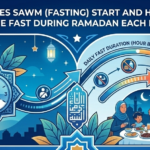
The duration of sawm each day in Ramadan spans from fajr to maghrib, typically 12 to 15 hours, varying by location and season. Near the equator, fasts are shorter, around 13 hours, while polar regions can exceed 20 hours, posing unique challenges. This variability reflects Allah’s wisdom, testing resilience differently across the globe. For instance, in Karachi during March 2026, fasts might average 13 hours, starting around 5:30 AM and ending at 6:30 PM. Muslims adapt by focusing on spiritual goals, not mere endurance. Calculating duration involves sunrise and sunset times, available via reliable Islamic calendars. Understanding this helps in planning meals and activities, preventing exhaustion. For women balancing home and worship, specialized learning can aid. Online Quran Classes for Ladies offer flexible schedules, incorporating fasting guidance. Delve into Can You Chew Gum While Fasting? Does It Break Your Fast in Ramadan? for clarity on daily practices. Prolonged fasts build empathy, mirroring the Prophet’s perseverance. By embracing varying lengths, believers appreciate sawm’s universal yet personal nature.
The Quran states:
“Then complete the fast until the sunset.”
Quran 2:187
This command defines the endpoint, ensuring uniformity. A hadith notes: “When night falls from this side and the day vanishes from this side and the sun has set, then the fasting person should break his fast.” (Sahih al-Bukhari 1954). Such precision guides daily observance, harmonizing physical and spiritual demands.
| Location | Approximate Fasting Duration (March 2026) | Fajr Time | Maghrib Time |
| Karachi, Pakistan | 13 hours | 5:30 AM | 6:30 PM |
| London, UK | 12 hours | 5:45 AM | 5:45 PM |
| New York, USA | 12.5 hours | 6:00 AM | 6:30 PM |
| Riyadh, Saudi Arabia | 13 hours | 5:15 AM | 6:15 PM |
| Jakarta, Indonesia | 13.5 hours | 4:45 AM | 6:15 PM |
This table illustrates global variations, aiding preparation.
When Does Fasting End: The Timing of Maghrib
Fasting concludes at maghrib, the moment the sun dips below the horizon, signaling permission to eat and drink. This precise end is observed through adhan calls or visual confirmation, emphasizing punctuality. Delaying iftar unnecessarily contradicts sunnah, as the Prophet encouraged prompt breaking. Maghrib’s arrival brings relief and joy, often marked by dates and water, following prophetic tradition. In communities, shared iftars strengthen ties, reflecting Islam’s social ethos. Accurate timing prevents invalidation, with apps providing alerts. For congregational aspects, Online Quran Academy facilitates learning prayer timings alongside fasting rules. Related to evening worship, Can You Pray Witr in Congregation? Islamic Ruling and the Ramadan Exception explores enhancements. Ending at maghrib allows reflection on the day’s efforts, preparing for taraweeh prayers. This transition from abstinence to sustenance symbolizes balance, teaching moderation.
The Prophet said:
“The people will remain upon goodness as long as they hurry to break the fast.”
Sahih al-Bukhari 1957
This encourages timeliness. The Quran affirms:
“And eat and drink but do not waste by extravagance.”
Quran 7:31
Post-maghrib, moderation is key, aligning with sawm’s lessons.
Variations in Fasting Duration Worldwide
Fasting durations differ globally due to latitude and seasons, creating diverse experiences. Northern countries like Iceland face up to 16 hours, while southern like New Zealand endure 14-15 hours in winter Ramadan. Equatorial regions maintain consistent 13 hours. Muslims in extreme latitudes may follow Mecca’s timings or nearest moderate location, per scholarly fatwas. This adaptability showcases Islam’s flexibility. Challenges include energy management in long fasts, fostering reliance on Allah. Sharing global stories inspires unity. Through Online Quran Learning, participants connect internationally, exchanging tips. On related restrictions, Can You Smoke During Ramadan? Does It Break Your Fast in Islam? clarifies boundaries. Variations highlight sawm’s inclusivity, accommodating all.
A hadith states: “Fasting is a shield.” (Sahih al-Bukhari 1895). In varying contexts, this protection remains.
| Region | Average Duration | Challenges |
| Polar North | 16+ hours | Prolonged daylight |
| Equator | 13 hours | Consistent heat |
| Southern Hemisphere | 14 hours | Shorter nights |
| Temperate Zones | 12-14 hours | Seasonal shifts |
This table aids awareness.
Spiritual Significance of Fasting Timings
Timings of sawm—from fajr to maghrib—hold deep spiritual meaning, symbolizing life’s cycles and divine mercy. Starting at dawn encourages early rising for suhoor and fajr prayer, instilling discipline. Ending at sunset allows gratitude expression through iftar. These bookends promote balance, preventing excess. Spiritually, they enhance taqwa, as hunger reminds of dependency on Allah. Long durations build patience, short ones appreciation. In Ramadan, timings amplify rewards, with nights for qiyam. Online Quran Classes deepen this understanding through tafsir. For eating schedules, When Can You Eat During Ramadan? Suhoor and Iftar Times Explained provides details. Timings foster empathy, mirroring prophets’ trials.
The Quran notes:
“So that you may complete the prescribed number and proclaim the greatness of Allah for guiding you.”
Quran 2:185
A hadith: “Fasting and the Quran will intercede for a servant.” (Sahih Muslim 804).
Common Misconceptions About Sawm Timings
Misconceptions abound, like believing imsak is the absolute cutoff—instead, it’s a precautionary buffer before fajr. Another: brushing teeth breaks fast if no ingestion occurs. Swallowing saliva naturally doesn’t invalidate. Some think water sips are allowed post-fajr—no, strict abstinence. Clarifying prevents errors. Online Quran Courses address these through fiqh lessons. On Quranic mentions, How Many Verses in the Quran Refer to Sawm (Fasting)? explores depth. Accurate knowledge ensures valid fasts.
Scholars cite: “Do not kill your fast with assumptions.” Derived from hadiths emphasizing caution.
Practical Tips for Observing Sawm Effectively
Tips include hydrating well at suhoor, choosing complex carbs. Break fast with dates for quick energy. Maintain light exercise, avoid overeating. Manage sleep with naps. For health conditions, consult scholars. These ensure productive Ramadan.
The Prophet advised: “Suhoor is a blessing.” (Sahih al-Bukhari 1923).
| Tip | Benefit | Example Foods/Activities |
| Hydrate | Prevents dehydration | Water, fruits |
| Balanced Suhoor | Sustains energy | Oats, yogurt |
| Prompt Iftar | Follows sunnah | Dates, soup |
| Light Exercise | Maintains fitness | Walking after iftar |
| Spiritual Focus | Enhances rewards | Quran reading |
Conclusion
In essence, sawm starts at fajr and lasts until maghrib, with durations varying yet united in purpose. This practice nurtures spirituality, discipline, and community. Embracing these timings leads to profound growth.
For expert guidance, Najam Academy serves as a premier online Quran Academy in the USA and UK, delivering affordable, accessible courses worldwide.
Educational Disclaimer: This article is for educational purposes only and does not constitute a fatwa. Please consult qualified scholars for personal rulings.
References Used
Quranic Verses:
- Quran 2:183
- Quran 2:185
- Quran 2:187
- Quran 7:31
Hadith References:
- Sahih al-Bukhari 1
- Sahih al-Bukhari 54
- Sahih al-Bukhari 1894
- Sahih al-Bukhari 1895
- Sahih al-Bukhari 1907
- Sahih al-Bukhari 1923
- Sahih al-Bukhari 1954
- Sahih al-Bukhari 1957
- Sahih Muslim 804
2200 words
About the Author:
I specialize in the spiritual and legal aspects of Sawm, drawing on over a decade of studying classical Fiqh and the Sunnah. My work focuses on making the rulings of fasting easy to understand while highlighting the inner discipline and devotion required during Ramadan. I bridge the gap between technical juristic requirements and the heartfelt pursuit of self-purification. By clearing up common misconceptions and offering practical advice, I help fellow Muslims transform their fast into a deeply personal journey toward Taqwa.
Muhammad Qasim