Starting With The Name Of Almighty Allah
Prayer (Salah) is one of the five pillars of Islam, equally obligatory for both men and women. However, many Muslim women seek clarity on the specific female prayer rules in Islam and how these may differ from male prayer practices. Understanding how to pray salah for women correctly is essential for every Muslim woman’s spiritual journey and connection with Allah.
This comprehensive guide addresses women’s salah rules, covering everything from posture adjustments to dress code requirements. Whether you’re a new Muslim, returning to prayer after a break, or simply seeking to perfect your worship, this detailed explanation will help you understand the proper methodology and spiritual significance of female prayer in Islam.
Understanding the Foundation of Women’s Prayer in Islam
The obligation of prayer for women is firmly established in Islamic teachings. Allah commands all believers to establish regular prayer, making no distinction between men and women in this fundamental duty.
“And establish prayer and give zakah and bow with those who bow.”
(Quran 2:43)
The Prophet Muhammad (peace be upon him) emphasized the importance of prayer for all Muslims, saying:
“Prayer is the pillar of religion, whoever establishes it has established religion, and whoever destroys it has destroyed religion.”
(Sahih al-Bukhari 527)
Core Principles of Female Prayer
- Equal Obligation: Women have the same prayer obligations as men
- Modified Postures: Certain physical positions are adapted for modesty
- Dress Requirements: Specific covering guidelines during prayer
- Exemption Periods: Times when women are excused from prayer
- Congregation Rules: Different guidelines for group prayer participation
Women’s prayer maintains all the essential elements of Islamic worship while accommodating the natural differences and modesty requirements prescribed in Islamic law. For young girls or adult women seeking female-only instruction, Online Quran Classes for Ladies provide a comfortable and effective learning environment with qualified female instructors, ensuring modesty and personalized guidance. Beyond this, Online Quran Classes also cater to general audiences, offering comprehensive programs that cover prayer, Quranic recitation, tajweed, and Islamic studies—all designed to fit into busy lifestyles.
Essential Requirements Before Prayer
Purification (Wudu) for Women
Before beginning prayer, women must perform ablution (wudu) just like men. The process remains identical with no gender-specific variations.
Steps of Wudu:
- Intention (niyyah) in the heart
- Wash your hands three times
- Rinse mouth three times
- Clean your nostrils three times
- Wash your face three times
- Wash arms up to the elbows three times
- Wipe the head once
- Wash feet up to the ankles three times
Women’s Prayer Dress Code in Islam
Proper covering during prayer is crucial for women. The prayer attire must meet specific requirements:
Dress Code Requirements:
- Cover the entire body except the face and hands
- Use loose-fitting, non-transparent clothing
- Ensure hair is completely covered
- Avoid tight or revealing garments
- Choose modest colors that don’t distract
The covering requirement comes from the Quranic guidance:
“O Prophet, tell your wives and your daughters and the women of the believers to bring down over themselves [part] of their outer garments. That is more suitable that they will be known and not be abused.”
(Quran 33:59)
For those looking to combine practical prayer instruction with broader Islamic knowledge, Online Quran Courses provide structured learning, covering prayer methodology alongside Quranic studies under expert guidance.
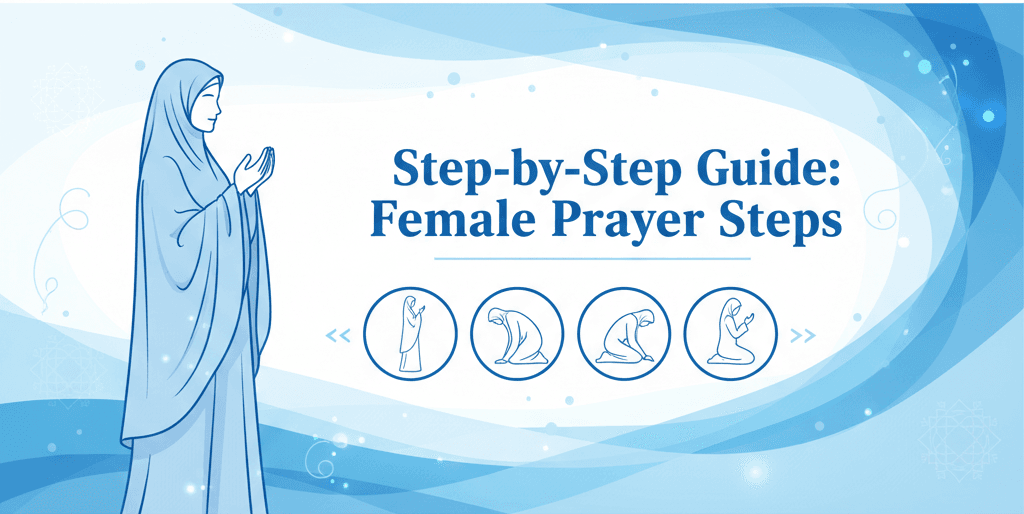
Step-by-Step Guide: Female Prayer Steps
Phase 1: Beginning the Prayer
Understanding the correct way for women to pray begins with the opening movements and recitations.
1. Standing Position (Qiyam)
- Stand facing the Qibla (direction of Mecca)
- Keep feet close together (not shoulder-width apart like men)
- Place hands on chest with right over left
- Maintain a modest, composed posture
2. Opening Takbeer
- Raise hands to shoulder level (not ear level like men)
- Say “Allahu Akbar” clearly
- Lower hands to chest position
3. Opening Supplication Recite the same opening duas as men, including Surah Al-Fatiha and an additional chapter.
Phase 2: Bowing Position (Ruku)
The women’s ruku position differs slightly from men’s prayer posture for modesty reasons.
Correct Female Ruku Posture:
- Bend forward moderately (not as deeply as men)
- Keep arms close to the body
- Place hands on knees without spreading fingers wide
- Maintain natural body alignment
- Keep legs close together
“Glorified is my Lord, the Most Great” (Subhana Rabbiyal Azeem) should be recited at least three times in this position.
For structured learning, Online Quran Classes for Adults provide excellent guidance on proper prayer techniques with qualified male and female instructors.
Phase 3: Prostration (Sujood)
The women’s sujood position is perhaps where the most significant differences from male prayer occur.
Proper Female Sujood Position:
- Lower to the ground gracefully
- Keep arms close to the body (not spread wide)
- Rest forearms on the ground alongside the body
- Keep feet together and tucked to one side
- Ensure body remains compact and modest
This modified position maintains the spiritual essence of submission while preserving feminine modesty. The prostration demonstrates complete surrender to Allah’s will.
“Glorified is my Lord, the Most High” (Subhana Rabbiyal A’la) should be recited at least three times during sujood.
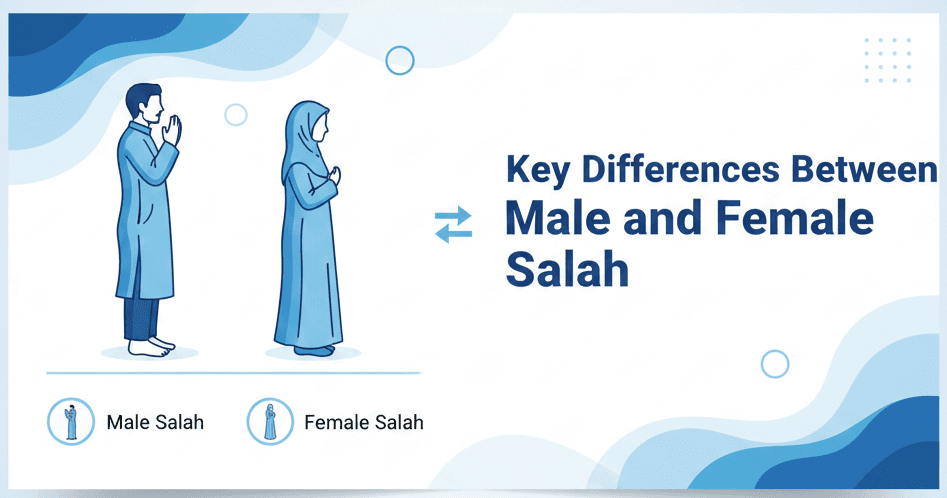
Key Differences Between Male and Female Salah
Understanding the difference between male and female salah helps women perform their prayers correctly while maintaining the required modesty.
Physical Posture Variations
| Prayer Position | Male Method | Female Method |
| Standing | Feet shoulder-width apart | Feet close together |
| Hand Raising | To ear level | To shoulder level |
| Ruku | Deep bow, arms extended | Moderate bow, arms close |
| Sujood | Arms spread, elbows raised | Arms close, forearms down |
| Sitting | Right foot vertical | Both feet to one side |
Spiritual Significance Remains Identical
While physical positions may vary, the spiritual aspects remain unchanged:
- Same recitations and supplications
- Identical prayer timings and obligations
- Equal spiritual rewards and benefits
- Same connection with Allah
The Prophet (peace be upon him) confirmed that women receive equal rewards for their worship:
“Women are the twin halves of men.”
(Sunan Abu Dawud 236)
For those seeking deeper understanding of Islamic principles, the Basics of Islam Course covers comprehensive prayer guidelines alongside other fundamental teachings.
Common Female Salah Mistakes and Corrections
Frequent Errors in Women’s Prayer
Many women unknowingly make female salah mistakes that can be easily corrected with proper guidance.
Most Common Mistakes:
- Improper Covering: Leaving hair or arms exposed during prayer
- Incorrect Posture: Copying male prayer positions exactly
- Wrong Hand Placement: Placing hands below chest or on stomach
- Loud Recitation: Reciting audibly when privacy isn’t ensured
- Rushed Movements: Hurrying through positions without proper pause
Corrections and Best Practices
Mistake Prevention Strategies:
- Practice prayer positions slowly and mindfully
- Use a prayer rug that reminds you of proper positioning
- Focus on gradual, dignified movements between positions
- Ensure complete covering before beginning prayer
- Learn from qualified female teachers when possible
The question of Can A Woman Recite Quran Loudly In Salah often arises among female practitioners. The general ruling suggests women should recite quietly when non-mahram men might overhear, prioritizing modesty while maintaining the prayer’s spiritual essence.
Women’s Prayer During Special Circumstances
Menstruation and Prayer
Islamic law provides clear guidance regarding Can You Pray Salah On Your Period. During menstruation, women are exempt from performing daily prayers, and this exemption is not considered a deficiency but rather a mercy from Allah.
Key Points About Menstruation and Prayer:
- Complete exemption from all five daily prayers
- No need to make up missed prayers later
- Encouraged to engage in dhikr (remembrance of Allah)
- May recite Quran for learning purposes (scholarly difference of opinion)
“Leave prayer when your menses begin and when it has finished, wash the blood off your body and pray.”
(Sahih al-Bukhari 331)
Prayer During Pregnancy and Postpartum
Pregnant women should continue regular prayers with position modifications as needed. For those unable to stand, learning How To Pray Salah Sitting Down becomes essential for maintaining this spiritual obligation.
The Online Quran Academy offers specialized guidance for women facing unique circumstances, ensuring no believer is left without proper religious education.
Special Prayers for Women
Congregational Prayer Guidelines
Women’s participation in congregational prayers follows specific Islamic guidelines that balance spiritual participation with modesty requirements.
Guidelines for Women in Congregation:
- Stand in separate rows behind men
- Maintain proper covering throughout
- Follow the imam’s movements precisely
- Keep voice low during group recitations
Through Online Quran Learning, women can access flexible programs that combine Quranic recitation, tajweed, and fiqh knowledge, tailored to accommodate personal circumstances and learning pace.
Eid Prayer for Women
Questions about Is Eid prayer obligatory for Women reflects the importance of understanding special prayer obligations. While strongly recommended, Eid prayer is generally considered sunnah (recommended) rather than fard (obligatory) for women, though scholarly opinions vary.
Benefits of Attending Eid Prayer:
- Community connection and celebration
- Increased spiritual reward
- Learning opportunity from khutbah (sermon)
- Demonstrating Islamic identity
Understanding What Are the Faraid (Obligatory Parts) of Salah? Required Acts for Prayer Validity helps ensure that whether in daily or special prayers, women maintain all essential elements for valid worship.
Advanced Prayer Guidance and Jurisprudence
Understanding Different Schools of Thought
The women salah rules hanafi and other madhabs (schools of Islamic jurisprudence) may have slight variations in specific details, though core requirements remain consistent.
Common Variations Between Schools:
- Exact hand positioning during prayer
- Specific posture adjustments
- Timing of certain supplications
- Minor differences in sitting positions
For comprehensive understanding of these differences, the Islamic Fiqh Course provides detailed comparative analysis of various jurisprudential approaches to women’s prayer.
Building Consistent Prayer Habits
Developing a regular prayer routine requires patience, dedication, and proper guidance. The female namaz method becomes second nature through consistent practice and mindful attention.
Tips for Prayer Consistency:
- Set reminders for prayer times
- Create a dedicated prayer space
- Practice positions during non-prayer times
- Connect with other practicing women for support
- Gradually increase focus on spiritual aspects
“And whoever relies upon Allah – then He is sufficient for him. Indeed, Allah will accomplish His purpose.”
(Quran 65:3)
Teaching Prayer to the Next Generation
Importance of Early Islamic Education
Muslim mothers play a crucial role in teaching their daughters proper prayer methodology. Starting Islamic education early ensures proper habit formation and spiritual development.
Effective Teaching Strategies:
- Model correct prayer behavior consistently
- Explain the reasoning behind different rules
- Make prayer time enjoyable rather than burdensome
- Use age-appropriate Islamic literature and resources
- Encourage questions and provide thoughtful answers
Online Quran Classes for Kids offer structured programs specifically designed for young learners, with female instructors available for girls who may feel more comfortable learning from women teachers.
The comprehensive approach to Islamic education ensures children understand not just What Is Salah In Islam – Salah Explained In Islam but also develop deep appreciation for this fundamental act of worship.
Spiritual Benefits and Personal Development
Prayer as Spiritual Discipline
Regular performance of salah according to proper guidelines brings numerous spiritual and psychological benefits for women.
Personal Growth Through Prayer:
- Increased mindfulness and presence
- Regular spiritual connection with Allah
- Stress relief through structured meditation
- Community belonging and identity strengthening
- Character development through discipline
Building Islamic Identity
For women learning how to pray namaz for ladies step by step, the journey often involves rediscovering or strengthening Islamic identity. Prayer serves as a daily reminder of faith commitments and spiritual priorities.
The process of learning proper prayer methodology connects women with centuries of Islamic tradition while addressing contemporary needs and circumstances.
Conclusion
Understanding how to pray salah for women encompasses both technical accuracy and spiritual depth. This comprehensive guide has covered the essential aspects of female prayer rules in Islam, from basic requirements to advanced considerations. Women’s salah rules maintain the fundamental spiritual elements of Islamic worship while accommodating the modesty and practical considerations specific to women.
The journey of perfecting prayer is ongoing, requiring patience, practice, and continuous learning. Whether addressing women’s prayer posture islam, understanding the women’s prayer guide islam, or mastering the salah for females step by step process, each element contributes to a deeper connection with Allah and stronger Islamic practice.
Remember that prayer is not merely a ritual but a profound spiritual discipline that shapes character, provides guidance, and strengthens faith. By following these guidelines and continuing to seek knowledge, Muslim women can establish meaningful, correct prayer practices that serve their spiritual needs throughout life.
This article is for educational purposes only and does not constitute a fatwa. Please consult qualified scholars for personal rulings.
At Najam Academy, we understand the unique learning needs of Muslim women seeking to perfect their Islamic practices. As a leading online Quran Academy serving students across the USA and UK, we offer comprehensive Islamic education programs with qualified female instructors and affordable packages. Our global reach ensures that every Muslim woman can access authentic Islamic knowledge from the comfort of her home, supporting her spiritual journey with expert guidance and flexible learning options.
Educational Disclaimer:
This article is for educational purposes only and does not constitute a fatwa. Please consult qualified scholars for personal rulings.
References Used
Quranic Verses:
- Quran 2:43
- Quran 33:59
- Quran 65:3
Hadith References:
- Sahih al-Bukhari 527
- Sahih al-Bukhari 331
- Sunan Abu Dawud 236
About the Author:
I specialize in Salah (Islamic prayer) and its rulings, with over a decade of experience studying and teaching its fiqh, spiritual depth, and Prophetic method. Trained under qualified scholars and grounded in classical juristic texts and authentic hadith, I focus on clarifying essential rulings, correcting common misunderstandings, and reviving khushuʿ, presence, and humility in prayer. My goal is to help Muslims experience Salah as a meaningful connection with Allah.
Abdul Aleem Mughal